
CANTATA CONCERT
17th Sunday after Trinity | September 27, 2026 | 5:00pm
-
Warum Betrübst du dich, mein Herz Friedrich Wilhelm Zachow (1663-1712)
~ Karla Fowkes, organ ~Please stand and join in singing the hymn Why art thou thus cast down, my heart? Hans Sachs (1494-1576)
Media vita in morte sumus Jacob Handl (1550-1591)
Cantata BWV 47: Wir sich Selbst erhöhet, der soll erniedriget werden J.S. Bach (1685-1750)
Chorus
Aria – Soprano
Recitative – Bass
Aria – Bass
Chorale
TEXT & TRANSLATION
-
Media vita in morte sumus
In the midst of life we are in death
Quem quaerimus adjutorem nisi te, Domine?
Of whom may we seek for succour,
but of Thee, O Lord,
Qui pro peccatis nostris juste irasceris
which for our sins justly art moved?
Sancte Deus, Sancte fortis,
Yet, O Lord God most holy, O Lord most mighty,
Sancte et misericors Salvator,
O holy and most merciful Saviour,
Amaræ morti ne tradas nos.
Deliver us not into the bitter pains of eternal death. -
Chorus
Wer sich selbst erhöhet,
Who exalts himself
der soll erniedriget werden,
Will be humbled,
und wer sich selbst erniedriget,
And who humbles himself
der soll erhöhet werden.
Will be exalted.Aria - Soprano
Wer ein wahrer Christ will heißen,
Whoever wants to be called a true Christian
Muss der Demut sich befleißen;
Must be concerned with humility;
Demut stammt aus Jesu Reich.
Humility comes from Jesus's kingdom.
Hoffart ist dem Teufel gleich;
Haughtiness is like the devil;
Gott pflegt alle die zu hassen,
God is accustomed to hate all those
So den Stolz nicht fahrenlassen.
Who do not abandon arrogance.Recitative - Bass
Der Mensch ist Kot, Staub, Asch und Erde;
Man is filth, dust, ash and earth;
Ist's möglich, dass vom Übermut,
Is it possible that from overweening pride
Als einer Teufelsbrut,
As one of the Devil's brood
Er noch bezaubert werde?
He is still deluded?
Ach Jesus, Gottes Sohn,
Ah Jesus , son of God
Der Schöpfer aller Dinge,
Creator of everything
Ward unsretwegen niedrig und geringe,
For our sake became humble and insignificant,
Er duldte Schmach und Hohn;
He endured disgrace and mockery;
Und du, du armer Wurm, suchst dich zu brüsten?
And you poor worm, do you try to boast about yourself
Gehört sich das vor einen Christen?
Is this how a Christian should behave?
Geh, schäme dich, du stolze Kreatur,
Go and be ashamed of yourself, you arrogant creature,
Tu Buß und folge Christi Spur;
Feel repentance and follow in Christ's footsteps
Wirf dich vor Gott im Geiste gläubig nieder!
Throw yourself down before God in faith!
Zu seiner Zeit erhöht er dich auch wieder.
In his own time he will raise you up again.Aria - Bass
Jesu, beuge doch mein Herze
Jesus, bend therefore my heart
Unter deine starke Hand,
Beneath your strong hand,
Dass ich nicht mein Heil verscherze
So that I do not forfeit my salvation
Wie der erste Höllenbrand.
As the first fire of hell
Laß mich deine Demut suchen
Let me seek your humility
Und den Hochmut ganz verfluchen;
And curse arrogance completely;
Gib mir einen niedern Sinn,
Give me a humble mind
Dass ich dir gefällig bin!
So that I may be pleasing to you!Chorale
Der zeitlichen Ehrn will ich gern entbehrn,
Worldly honour I shall do without completely,
Du wollst mir nur das Ewge gewährn,
If You will only grant me what is eternal
Das du erworben hast
That you have won
Durch deinen herben, bittern Tod.
Through your harsh bitter death
Das bitt ich dich, mein Herr und Gott.
I ask you for this, my Lord and my God.
PROGRAM NOTES
-
The text originates from the Book of Common Prayer (specifically the Order for the Burial of the Dead), written and translated into English by Archbishop Thomas Cranmer in 1549. While it is a liturgical prayer rather than direct scripture, it draws heavily from earlier Christian texts and underlying biblical themes:
Latin Origin: Cranmer translated the opening lines from the 9th-century Latin antiphon and Gregorian chant "Media vita in morte sumus" ("In the midst of life we are in death"), traditionally attributed to the monk Notker the Stammerer.
Trisagion Influence: The lines "O Lord God most holy, O Lord most mighty, O holy and most merciful Saviour" are adapted from the ancient Christian Trisagion prayer ("Holy God, Holy Mighty, Holy Immortal, have mercy on us").
Biblical Echoes: The passage reflects several biblical passages, including:
Job 14:1–2 (on the brevity and uncertainty of life).
Psalm 90:7–12 (God's anger over sin and human mortality).
Psalm 130:3 and Psalm 39:11 (seeking mercy and succor for our sins).
— David Long
-
This cantata was written for the Seventeenth Sunday after Trinity and first performed on October 13, 1726, three hundred years ago. The libretto, by Johann Friedrich Helbig, recounts Jesus’ teachings against pride.
The text of the first movement directly quotes the final verse of the Gospel appointed for this Sunday, Luke 14:1-11: “Whoever exalts themself shall be humbled, and whoever humbles themself shall be exalted.” These opposing ideas naturally invite musical contrary motion. The librettos of the second and third movements offer a browbeating sermon against pride, with declarations such as “God cultivates hatred for those who do not abandon haughtiness” and “Man is excrement, stench, ashes and earth.” In the final two movements, the listener is charged with a prayer for humility and a resolve to “curse arrogance." Alfred Dürr notes that the phrase in movement four, “as did that first Hell-bound,” refers to the legend in Christian belief that Lucifer was cast out of heaven because of his pride. Together, the movements form a three-part liturgy: the reading of scripture in movement one, the response to that reading or sermon in movements two and three, and the listener’s prayers in movements four and five.
Musically, Bach sets the opening movement in an expansive 228 measures for four-part choir, strings, two oboes, and continuo. It begins with a long non-fugal sinfonia with a theme that is unrelated to the fugue the choir will later sing. In measures 12–14, however, the first oboe introduces a sequence that later forms the basis of the choral fugue subject.
Bach paints the opposing ideas of the text, “whoever exalts themself shall be humbled,” in the choir’s first entrance. The tenors begin at the bottom of a g minor scale and rise to its summit on the word erhöhet (“exalted”), only to descend immediately to the bottom of the scale on erniedriget (“humbled”). The altos then enter with the fugue subject in the same manner, now in the dominant key of d minor. Beneath them, the tenors sing the countersubject on the contrarian text, “and whoever humbles themself shall be exalted.” Here the musical motion is reversed: the line begins high, falls an octave, and then rises again on the words erniedriget and erhöhet.
A brief, somewhat homophonic statement of the first half of the text appears twice, punctuated by the orchestra, and serves as a conclusion to the fugal section. Bach then presents the entire fugue subject, countersubject, and conclusion once more. The movement closes with the same forty-four-measure sinfonia heard at the beginning, this time with the choir woven into the orchestral texture.
Movement two was originally scored with obbligato organ, which Bach replaced with obbligato violin when he revived the cantata in the late 1730s. Once again, the music paints a picture of the humility/pride contrarian text. The principal section depicts humility through a graceful, flowing instrumental line. In the contrasting middle section, pride is represented by an insistent rhythm in the soprano, reinforced by sharp accents and double stops (two notes played simultaneously) in the violin.
An accompanied recitative for strings follows in movement three and leads to the second aria, movement four, scored for bass, obbligato oboe and violin, and continuo. Bach expertly uses these voices first as a duet between the oboe and continuo, then as a trio when the violin enters, and finally as a quartet with the entrance of the bass voice. The aria’s contrasting middle section is reminiscent of the opposition between humility and pride heard in movement two: “on the one hand, flowing rhythm and stepwise melody, and on the other, speech-like rests and large intervals” (Dürr, p. 567).
A simple chorale concludes the cantata. Its plain and unadorned setting may be an intentional choice by Bach, serving as a final musical expression of the humility at the heart of the Gospel text.
— David Long
GUEST ARTISTS & ARTISTIC STAFF

-
Janelle holds a Bachelor of Science in Electrical Engineering and a Music minor from Valparaiso University. She works as a Substation Protection and Controls Supervisor with MESA Associates. Alongside her successful engineering career, Janelle is an accomplished French horn player and musical leader in her community. She is the founder and Artistic Director of Chorus Angelorum Chattanooga and serves on the board and frequently solos with the Chattanooga Bach Choir. A lifelong church musician, Janelle joined the Royal School of Church Music at age eleven and earned its prestigious Gold Award with Honors in 2016 for excellence in liturgical music, tradition, and music theory. She has recently been appointed to and is thrilled to serve as a part of the Commission on Ministry for the Episcopal Church in East Tennessee. In her free time, Janelle is a competitive triathlete and coaches swimming and strength training with McCallie/GPS Aquatics. She lives in Chattanooga with her husband, Trevor, and their energetic, curly-tailed Labrador, Mae.
-
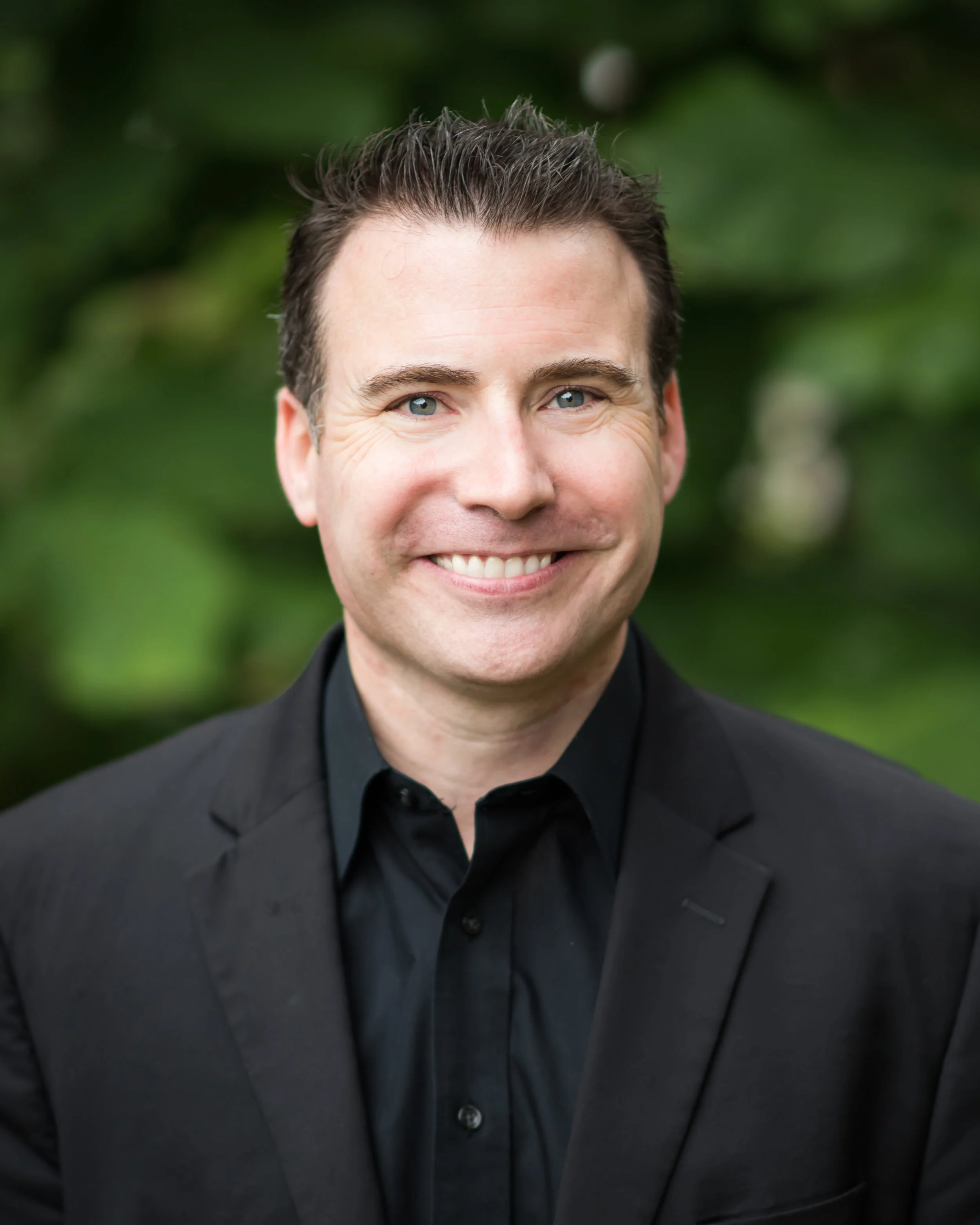
Matthew Hoch joined the faculty of Auburn University in 2012, where he was tenured in 2015 and promoted to the rank of professor in 2020. He has appeared as a soloist with the Oregon Bach Festival, the Santa Fe Desert Chorale, the Vox Consort, Harmonie Universelle, the Hartford, Rome, and Nashua symphony orchestras, the Atlanta Baroque Orchestra, and the United States Coast Guard Chamber Players. He is the author, coauthor, editor, or coeditor of eleven books and over forty peer-reviewed articles that have appeared in numerous academic and professional journals. Hoch currently serves as associate editor of the voice pedagogy column for the Journal of Singing and editor of the “On the Voice” column in the ACDA Choral Journal. In 2018, he presented performances and master classes in the United Arab Emirates and was awarded the Auburn University College of Liberal Arts Teaching Excellence Award.
-
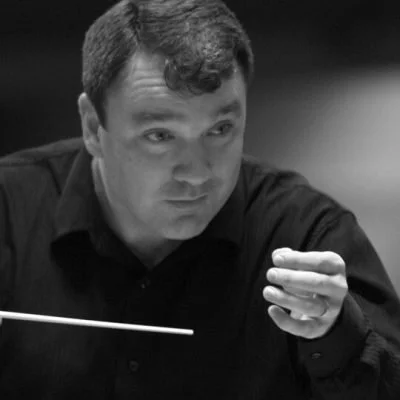
David Long is currently in his 22nd season as artistic director and conductor of The Chattanooga Bach Choir. In addition, he serves as Director of Music/Choir Master at Grace Episcopal Church, Chattanooga, as well as conducting the Tennessee Festival Singers. During his tenure, David Long has strategically developed the Bach Choir’s masterworks choral- orchestral concert offerings, featuring Bach’s Mass in B Minor and St. John Passion, Mozart’s Mass in C Minor, Beethoven’s Mass in C and Missa Solemnis, Mendelssohn’s Elijah, and Rachmaninoff’s All-Night Vigil, among others. He has expanded the Bach Choir’s seasonal offerings with an ongoing Cantata Series, as well as adding to the repertoire with 20th & 21st century works by Britten, Gjeilo, Lauridsen, and Whitaker. David Long is a graduate of Elon College and holds Master’s Degrees in Performance-Orchestral Conducting (University of Tennessee at Chattanooga) and Church Music (Southern Theological Seminary). He has participated in a number of premier conducting events, including the Oregon Bach Festival, where he was selected as a conducting fellow, and participated in master classes with Helmuth Rilling. David was also a prize winner in the 2001 Symphonic Conducting Workshop and Competition at the Accademia Dell’Arte of Florence/Arezzo.
CHATTANOOGA BACH CHOIR
SOPRANO
Suzannah Bozzone
Abby Cunningham
Cynthia Johnson
Gwyneth Mooney
Janelle Wagoner
TENOR
Andy Bright
James Harr
Robert Sauser
ALTO
Christine Armao
Brittany Duggan
Esther Myers
BASS
Matthew Hoch
Ben Johnson
Andrew Owen
CHAMBER ORCHESTRA
VIOLIN I
Sheri Peck
VIOLIN II
Nick Hoy
VIOLA
Metiney Suwanawongse
CELLO
Paul Vest
BASS
Taylor Brown
OBOE I
Carey Shinbaum
OBOE II
Jessica Smithorn
HARPSICHORD
Karla Fowkes